
Canada strengthens marine conservation in Madagascar
Canada recognizes that protecting biodiversity abroad and at home contributes to building strong, sustainable economies and creating healthier and more resilient societies. Canada’s 2023-2026 International Biodiversity Program helps developing countries to fulfill their commitments under the Kunming-Montreal Global Biodiversity Framework to restore, conserve and sustainably use biodiversity.
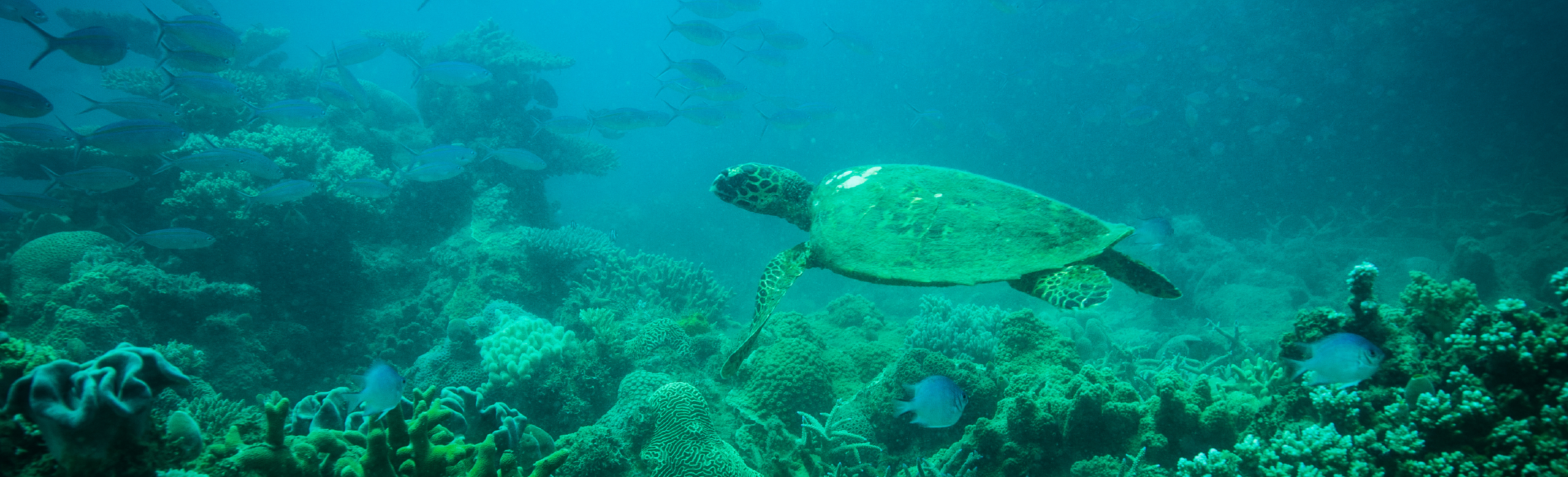
The Nosy Hara Marine Protected area in Northwest Madagascar stretches from the coastline to small offshore islands. As part of the Northern Mozambique Channel region, it is one of the world’s coral biodiversity hotspots.
The region is home to an extraordinary diversity of marine life, including 279 species of fishes and 108 species of corals. It supports five species of marine turtles, more than 30 species of water birds and the second tiniest chameleon in the world.
Protecting this ecosystem is critical not only for global biodiversity, but also for the communities who depend on it for their survival.
For families living along this coastline, the sea is not just beautiful scenery; it feeds them, sustains their income, and anchors their cultural identity. Yet many households face persistent poverty and growing climate risks. In recent years, stronger winds, heavier rainfall, and prolonged droughts have increasingly disrupted fishing, food access, and household stability. These impacts are not evenly distributed. Women and girls are often the most affected.
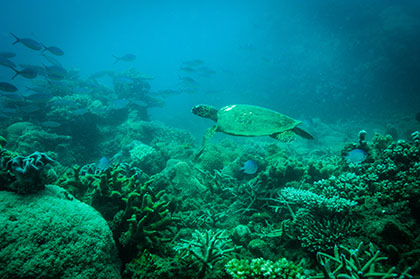
Photo credit: © Nick Riley - WWF Madagascar
A sea turtle swims above the coral reef in the Nosy Hara region.
Through a $2.5 million investment from Global Affairs Canada, World Wildlife Fund (WWF) Canada is working with WWF Madagascar on the Building Resilient Communities through Marine Conservation in Madagascar project. The partnership integrates biodiversity conservation with inclusive, community-driven development to address both environmental degradation and climate vulnerability. By strengthening local capacity and protecting critical marine ecosystems, this investment helps communities adapt to a changing climate while safeguarding the natural resources their livelihoods depend on.
Efforts are now underway to strengthen governance and sustainable management of the Nosy Hara Marine Protected Area and surrounding Locally Managed Marine Areas and supporting women’s participation and leadership in natural resource decision-making. By building local capacity and improving climate resilience, the partnership delivers measurable environmental outcomes alongside social and economic benefits.
In Nosy Hara, women like Clémentine Rakotozanaka now play a formal leadership role in marine governance—helping set fishing rules, resolve conflicts, and represent their communities in park management discussions. Her leadership reflects a broader shift toward inclusive decision-making that strengthens both conservation outcomes and community trust.
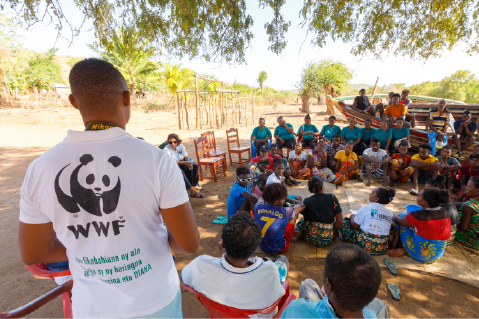
Photo credit: © Fita- WWF Madagascar
WWF Madagascar meets with local community members.
In December 2025, marine teams from WWF Madagascar, Madagascar National Parks, and the Institute of Fisheries and Marine Sciences visited several sites within the marine park to assess the condition of coral reefs. For the first time in Nosy Hara, communities, Madagascar National Parks, and WWF now share a common baseline to monitor changes in reef conditions over time. These observations provide an initial—though still partial—reading of the ecological situation, which is nonetheless essential.
As highlighted by Tahiana Rakotomanga of WWF Madagascar: “Nosy Hara Marine Park is a jewel, but it remains fragile. What we are observing today provides an essential working basis to guide future conservation actions.”
Protecting coral reefs means investing in the local communities whose lives and livelihoods depend on the sea. Through support from Global Affairs Canada, WWF is strengthening community-led efforts to steward and protect this globally significant ecosystem for the benefit of both people and wildlife. Local leadership shows that conservation and community resilience can advance together, offering a powerful model for coastal protection across the region.
- Date modified:
