
Blue growth, green future: Strengthening food security in the Indo-Pacific region
Securing the Future of Food
Aquaculture is the world’s fastest-growing food sector. It provides more than half of the fish we eat globally. In Southeast Asia and the Pacific, it is a lifeline for food security and local jobs.
However, rapid growth in this region risks increasing environmental damage and deepening social inequality. Climate change adds to these challenges. Warming waters, frequent flooding, and shifting ecosystems threaten small-scale farmers. To protect these vital resources, the Government of Canada and the International Development Research Centre (IDRC) launched Nature-based Climate Solutions in Aquaculture Food Systems in Asia-Pacific, known as AQUADAPT. This initiative supports 11 research projects across 10 countries. We're helping small-scale farmers adapt to climate change while growing their businesses.
A Vital Link to Canada
This work isn't just about local impact; it’s about a shared global economy. The Indo-Pacific region produces 90% of the world’s aquaculture. It is also one of the most at-risk areas on Earth, experiencing 70% of the world’s natural disasters.
Canada imports 33% of its seafood from the Indo-Pacific region. By investing in sustainable farming practices abroad, Canada is securing its own supply chains. Supporting resilient aquaculture ensures that the seafood on Canadian plates remains sustainable, safe, and available for years to come. These partnerships also expand Canada’s diplomatic and business ties in this region.
Scaling Nature-Based Solutions
AQUADAPT uses nature-based solutions – approaches that use natural processes to solve climate problems.
- In Fiji: Farmers use black-lip oysters to naturally filter and clean water.
- In Indonesia: Mangrove restoration is integrated with shrimp ponds to protect coastlines from storms.
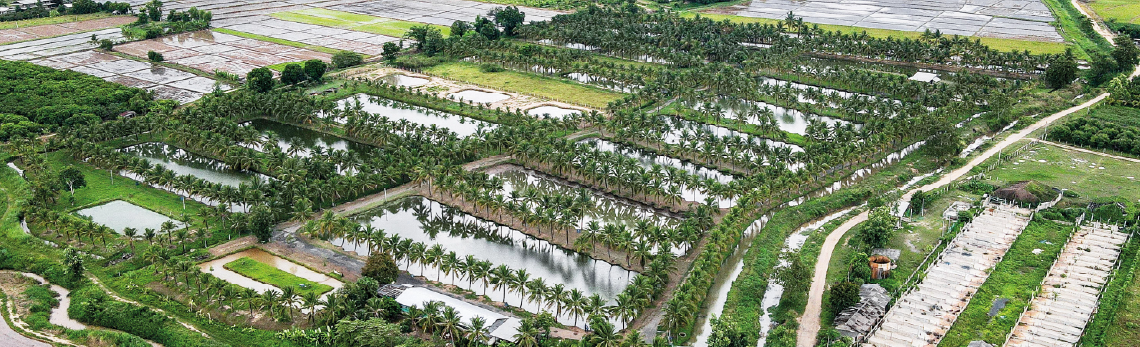
- In Thailand: Farmers like Anand Koses use ancestral knowledge – using salt and limestone instead of chemicals – to keep pond water healthy.
While these solutions are effective, small-scale farms still need better policies, more knowledge, and financial incentives to adopt them fully. AQUADAPT bridges this gap by turning research into practical tools.
Growth that includes everyone
Economic growth is only inclusive if everyone has a seat at the table. AQUADAPT places a high priority on gender equality and social inclusion. In many aquaculture communities, women carry out much of the labour but often have less say in decision making and less access to training.
AQUADAPT works directly with women and marginalized groups to ensure they have the tools and authority to lead.
“They call Anand Koses ‘Professor’ in his village,” notes Louis Lebel, leader of one of the 11 AQUADAPT projects. This respect stems from his ability to merge experience with science. By empowering local leaders and ensuring women take part in research and management, we create economies that are not just stronger, but fairer.
Moving evidence to action
AQUADAPT brings together more than 75 partners and collaborating organizations, including universities and private businesses. Together, they are turning scientific evidence into practical action. By combining innovation with community knowledge, this initiative is building a sustainable “blue economy” that protects aquatic resources and strengthens coastal communities for the long term.
- Date modified:
