
Seeds of the living forest: Restoring land and knowledge in Maxakali territory
Where the forest once stood
In the northeast of Brazil’s Minas Gerais state, the land around many Maxakali villages tells a story of loss. Much of what used to be part of the dense Atlantic Forest is gone. Today, open land and invasive grasses cover the area. The forest that was once rich in animals, fruits, medicinal plants and materials has disappeared.
For the Maxakali people, also known as the Tikmũ’ũn, this transformation has changed daily life. Forest plants that were once used for crafts and tools are harder to find. Animals and fish that were once common are now hard to find. Even food has changed.
Community members say that their diet used to regularly include honey from native bees and fruits from the forest. Today, many families rely more on processed foods brought in from outside their territory. As teacher Marilton Maxakali explains, these changes affect health and weaken both bodies and traditions.
For the Maxakali, the forest has always been more than a source of materials or food: it is part of a living world. Their cultural and spiritual life is deeply connected with forest spirits called Yãmĩyxop. These singer-spirits visit villages during rituals to sing, dance and share food. Without the forest, this relationship grows harder to sustain.
Restoring the land, then, means restoring something much deeper.
A partnership for restoration
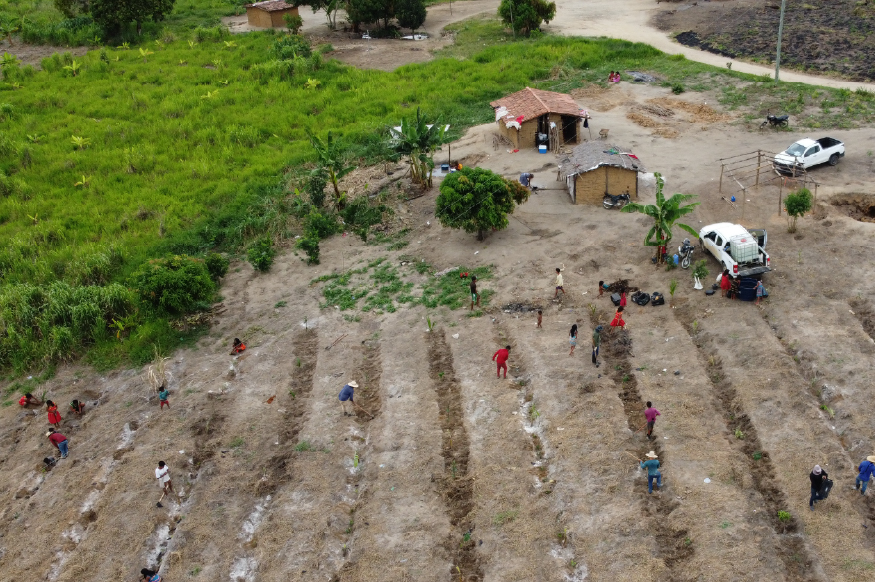
Photo credit: © Fundação José Silveira
Caption: Team members working together to prepare a plot of land for reforestation.
The Maxakali territory lies within Brazil’s Atlantic Forest biome, one of the richest ecosystems on Earth, and one of the most threatened. Reviving degraded land here supports local livelihoods and contributes to global biodiversity and climate goals. Restoration efforts are underway through the Mimãtihi project, a name that means “living forest” in the Maxakali language. Local communities are working in collaboration with the Fundação José Silveira’s Arboretum Program and with partners linked to the Hileia Baiana Model Forest. This initiative is part of a wider landscape effort, and is being implemented through the International Model Forest Network (IMFN), a global network of partnerships to promote the sustainable management of forest landscapes. Model Forests bring communities, researchers, governments and other partners together to find solutions to challenges such as land degradation, biodiversity loss and climate change.
This collaborative approach allows restoration to be guided not only by science but also by local knowledge and community priorities. Canada has supported these efforts through international forest and climate initiatives that fund restoration activities, training and knowledge sharing. These partnerships help strengthen nature-based solutions that restore ecosystems while supporting the people who depend on them.
Planting a living forest
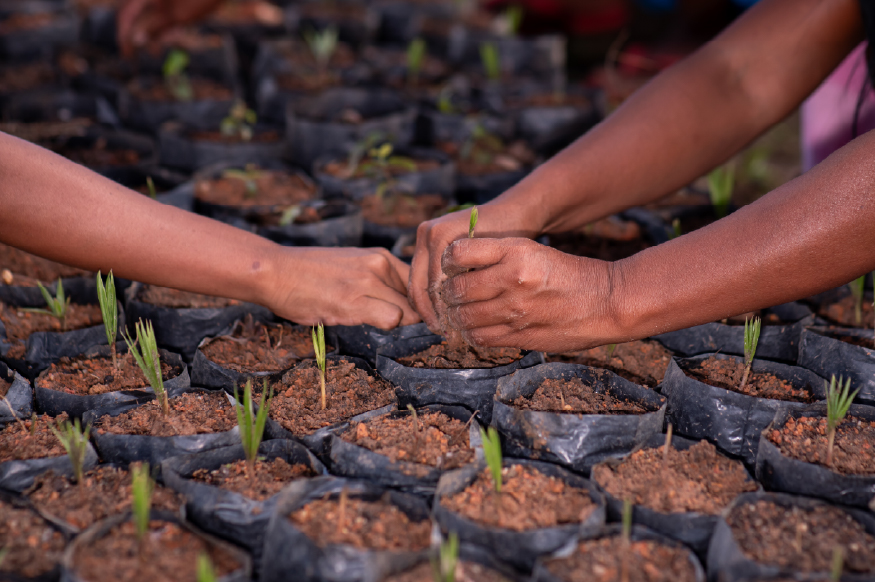
Photo credit: © Fundação José Silveira
Caption: Community members prepare seedlings in Brazil’s Hileia Baiana Model Forest.
The Mimãtihi project builds on previous work done through the IMFN’s RESTAURacción program, a Canadian government initiative to restore landscapes degraded by deforestation, land conversion and climate impacts. Its goal is simple but ambitious: bring forests back and support the Maxakali so they can lead restoration in ways that honour their knowledge, culture and deep connection to the territory.
The project combines forest restoration with agroforestry. This means planting trees alongside crops and fruit species that support biodiversity and provide food and income. Working closely with Maxakali community members, project teams carried out consultations and field assessments to identify priority areas for restoration and to ensure that the work aligns with local knowledge and needs.
In 2025, 10 agroforestry areas covering about 4 hectares were set up, with more than 5,500 native tree saplings planted alongside banana plants, exotic fruit trees and crops such as corn. Two additional restoration areas were also created along watercourses and flood plain zones in Aldeia Manoel Damasio. These areas added another 13,000 saplings across a further 4 hectares.
Each planting helps rebuild the layers of a forest ecosystem: tall canopy trees, fruit-bearing species and crops that provide food in the shorter term. Over time, these spaces begin to transform: birds return, shade spreads, soil recovers and the forest begins to weave itself back together.
Women, seeds and forest knowledge
One of the key strengths of the Mimãtihi project is the knowledge and participation of the Maxakali community—especially women, who are deeply involved in restoration activities.
Workshops and training sessions have focused on seed collection, nursery management and sapling production. These activities help community members to actively participate in restoration using species gathered from nearby forest remnants. By sourcing seeds locally, the team plants trees that are better adapted to the land and climate.
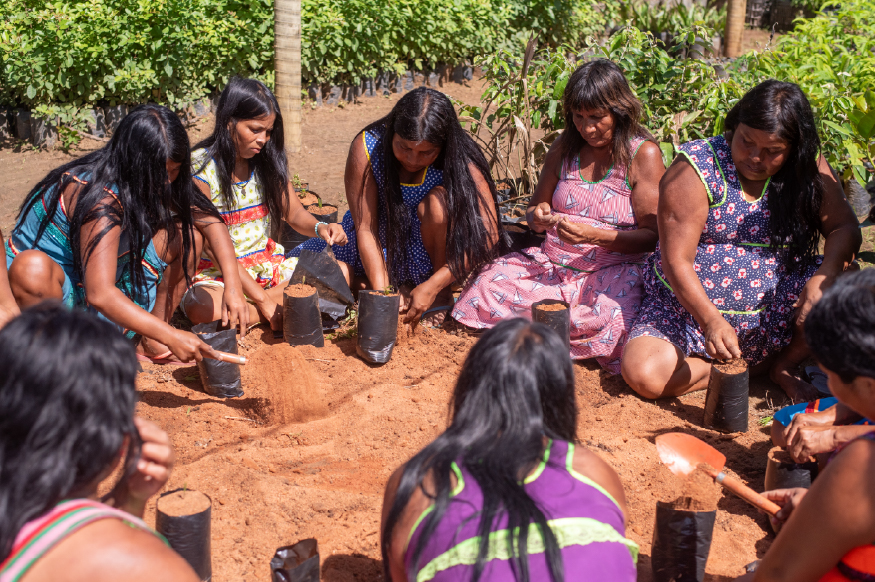
Photo credit: © Fundação José Silveira
Caption: Community members work together to fill planting bags with soil as part of a seedling preparation activity.
These activities also help Maxakali women practise traditional crafts using fibres and forest materials, and maintain these skills, even as raw materials become harder to find. By restoring native species like embaúba, the fibres of which are used to make bags, nets, hammocks and other woven items, the project supports both cultural practices and livelihoods.
Restoration, in this sense, is cultural as well as ecological, as it leads to the return of materials that sustain daily life and ancestral knowledge.
A new generation of forest guardians
Young people are also shaping the future of the Mimãtihi project.
Teachers in the villages have received training on social and environmental topics, and now give lessons on restoration, climate change and biodiversity. Youth workshops on art and community communication encourage young Maxakali to tell the story of their land and the changes happening within it.
Some community members have taken on new roles as agroforestry agents and nursery managers, helping to care for seedlings and monitor restoration areas. These positions strengthen community autonomy while creating local expertise in forest management.
There have also been workshops throughout the project exploring a range of topics, from medicinal plants and composting to water stewardship and organic food production. This practical knowledge supports healthier land and healthier communities.
Restoring land, reviving futures
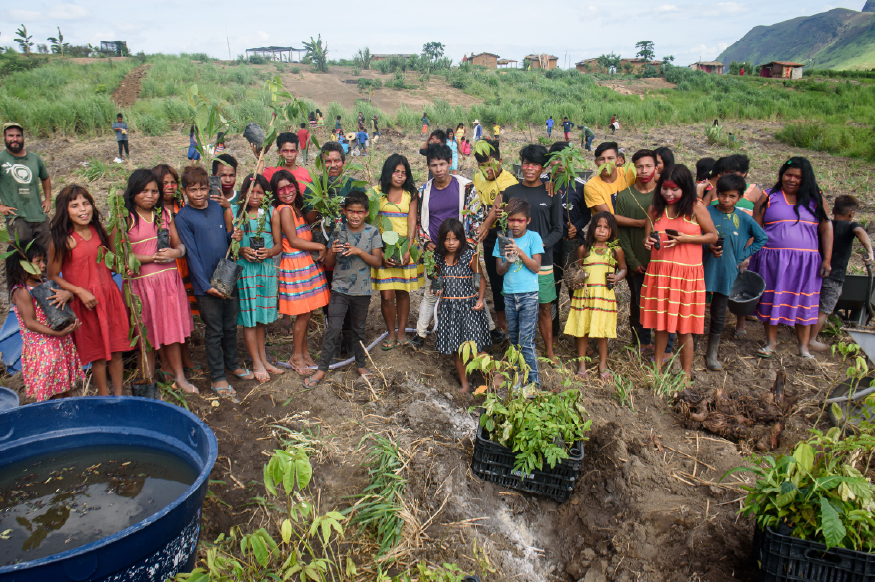
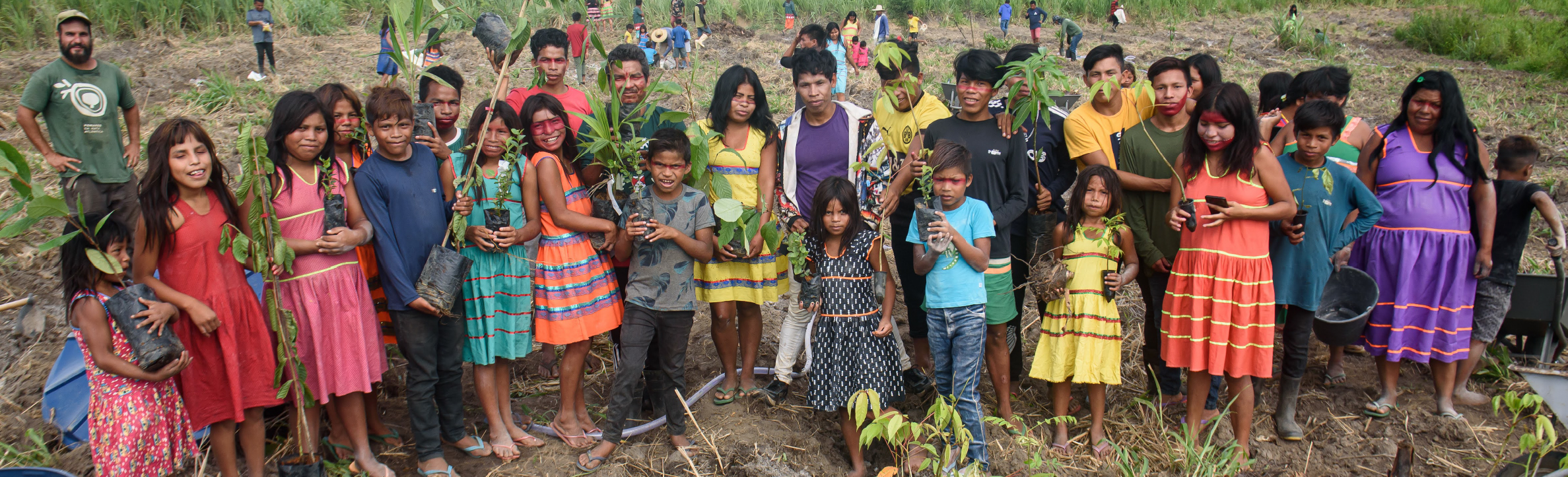
Photo credit: © Fundação José Silveira
Caption: Community members of all ages gather in a field to take part in a large-scale tree‑planting activity.
Restoring a forest does not happen overnight.
Through careful planting, stewardship and close collaboration, the landscape slowly begins to recover: trees take root, waterways stabilize and biodiversity starts to return. For the Maxakali, these changes mean something more than ecological recovery. Restoration strengthens cultural practices, revives knowledge and ensures that future generations can continue to live in balance with the land.
Mimãtihi is more than a reforestation project. It is the rebuilding of a relationship between people and the living world around them. It shows how local knowledge, community action and international support can work together to restore and protect some of the world’s most threatened forests. For Canadians and global citizens, it is a reminder of how far-reaching the effects of restoring local ecosystems can be. Healthy forests support resilient communities everywhere. On Maxakali land, they not only provide food, fibre and medicine, they also capture carbon, protect wildlife, keep waterways healthy and help address climate change—benefits that extend far beyond this corner of Brazil.
And as forests grow back, so too does the possibility of a future where ecosystems, livelihoods and cultures all flourish together.
- Date modified:
