
One teacher, one schoolyard, and the power of play
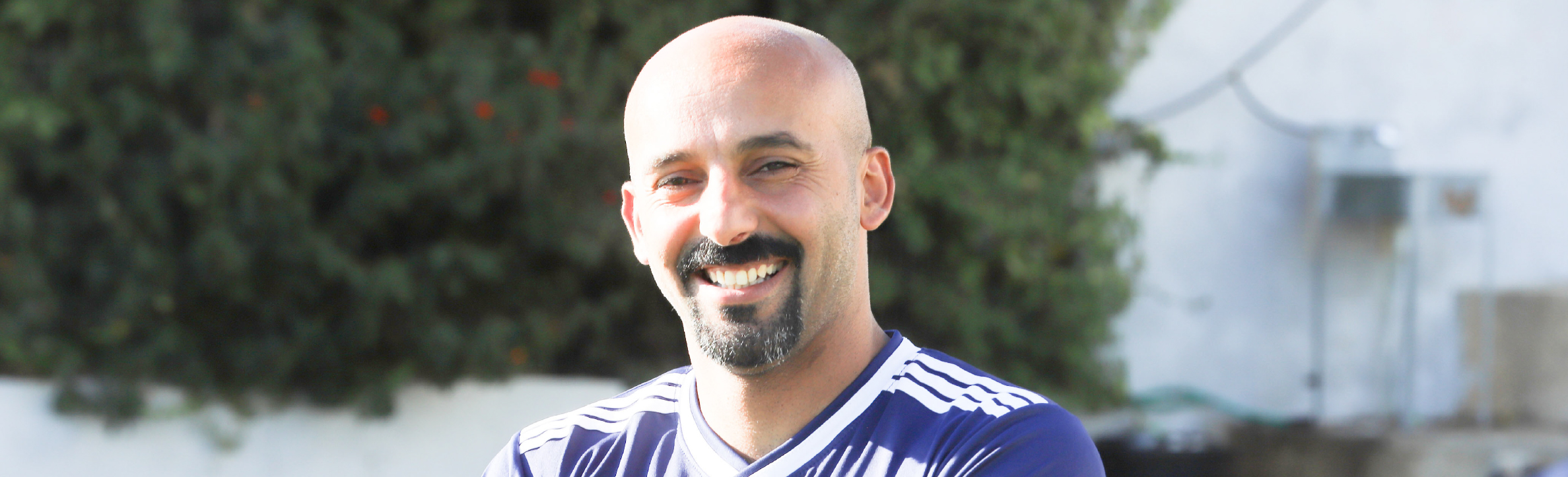
Every morning before the first bell rings, the yard of a primary school in Ramallah begins to fill with children. A soccer ball rolls across the concrete. A few students race after it. Others gather in small groups, talking before class begins.
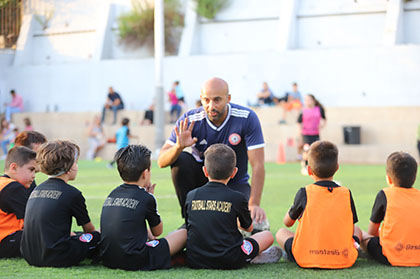
Photo credit: Anat Ibrahim Al-Mazin
Caption: Students gather on the field as Haitham leads them through a group activity that builds teamwork and confidence.
In the middle of the yard stands Haitham, the school’s physical education teacher.
His work is part of a larger mission: the TOGETHER project. This initiative is supported by the Government of Canada in partnership with Right To Play. It works across the West Bank to help remove barriers to education for refugee children, especially girls. By strengthening how teachers support their students, the project helps schools become safer and more supportive places to learn. Through play, children build the skills they need to handle conflict and connect with others. They also learn to cope with stress, both at school and in their everyday lives.
The importance of safer spaces
For Haitham, these early moments matter. Many of his students are growing up under occupation. Checkpoints, military presence and restrictions on movement shape their daily lives. For some children, the schoolyard is one of the few places where they can play freely and spend time with friends.
Haitham believes these moments are more than just a break between lessons. They are part of how children learn to trust each other, build confidence and feel that they belong.
Starting with a circle
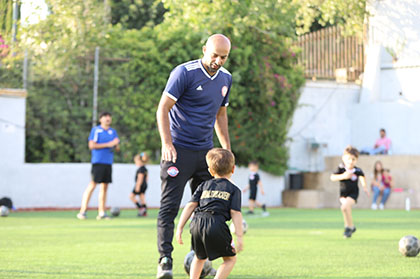
Photo credit: Anat Ibrahim Al-Mazin
Caption: During practice, the teacher guides a young player through a simple exercise, creating a supportive space for children to learn new skills.
When Haitham meets a new class each year, he does not begin with drills or exercises.
Instead, he gathers the students in a circle and asks a few simple questions:
How should we treat each other?
How can we make sure everyone feels included?
What should we do when something feels difficult?
Together, the students agree on a few rules for the year. The exercise is simple, but it helps build trust within the group and reminds everyone that their voice matters.
Beyond the schoolyard
Haitham has taken part in Right To Play training every year for 17 years, most recently through the TOGETHER project. The training has helped him create safe, inclusive spaces where girls and boys can learn and grow.
In many schools in the West Bank, sports and physical education are still seen as activities mainly for boys.
As the father of 3 daughters, Haitham challenges that idea.
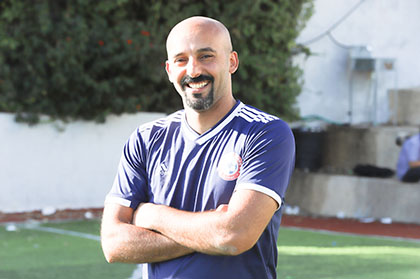
Photo credit: Anat Ibrahim Al-Mazin
Caption: Haitham has taken part in Right To Play training every year for the past 17 years, most recently through the TOGETHER project. He helps create safe, inclusive and gender-responsive spaces at school and at home, so children can learn and grow free from discrimination and violence.
He began inviting girls’ teams from nearby schools to play friendly matches against the boys. At first, some of the boys laughed or doubted the girls’ abilities. Haitham used those moments as teaching opportunities, asking the boys to reflect on their reactions and how their words affected others.
Over time, the atmosphere began to change. The matches became opportunities for students to learn respect, teamwork and encouragement—no matter who was playing.
A space to be children
For Haitham, the results are visible in small moments. A child joining a game for the first time. A team learning to work together. A group of students laughing together in the yard.
In a place where daily life can be difficult, the TOGETHER project offers something simple but vital. It is a space where children can play and learn. For a while, they can just be children.
- Date modified:
