
In the hands of midwives: Transforming maternal health in South Sudan and the Democratic Republic of the Congo
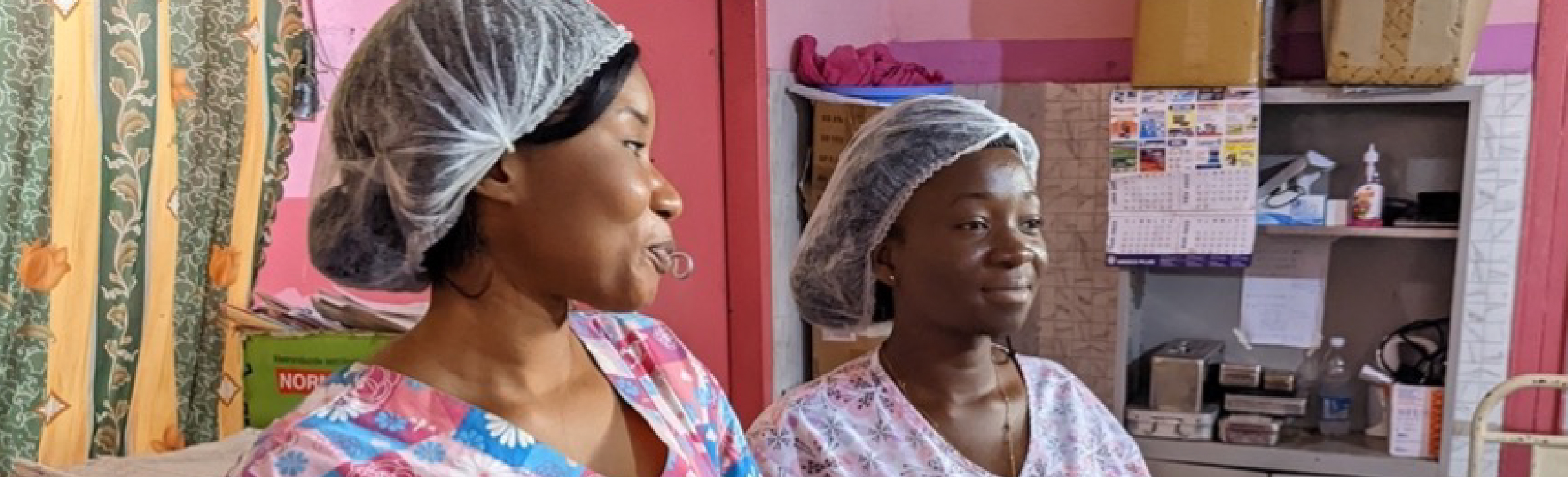
In a healthcare facility in Sub-Saharan Africa, a woman arrives in labour. The room is busy. A midwife meets her at the door. There are questions, quick assessments, a bed prepared. But something else happens too—something less visible, yet just as vital. She is listened to. Reassured. Respected.
For many women, that has not always been the case.
Both South Sudan and the Democratic Republic of the Congo (DRC) face some of the highest maternal mortality rates in the world. Health systems are under strain. Skilled healthcare workers are few, especially outside big towns. For some women, past experiences of neglect or mistreatment have made them hesitant to seek care at all.
In this context, how care is delivered can matter as much as whether it is available.
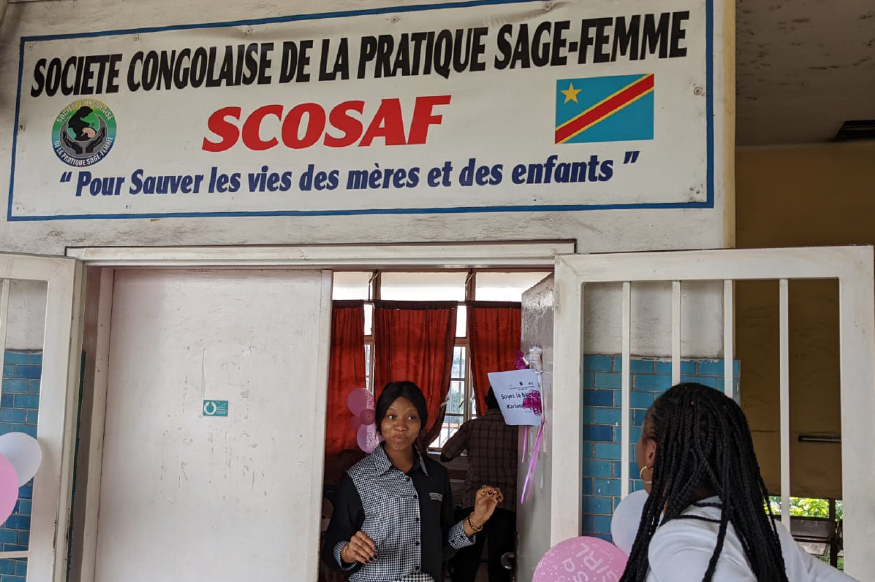
Photo credit: © Daniel Lavigueur / CAM
Caption: Staff members of the Société Congolaise de la pratique Sage-Femme stand below a SCOSAF banner displaying “Pour sauver les vies des mères et des enfants” in the Democratic Republic of the Congo.
Respect as a foundation
The SMART-RMC (Respectful Maternity Care) project set out to change that.
Supported by the Government of Canada and implemented by the Canadian Association of Midwives (CAM), the project partnered with the South Sudan Nurses and Midwives Association (SSNAMA) and the Congolese Midwives Association, Société Congolaise des Sages-Femmes (SCOSAF). Together, they worked to improve both the quality of care and the systems that support it.
The goal was simple, but far-reaching: to improve maternal outcomes by ensuring that women receive care that is safe, evidence-based, and grounded in dignity and rights.
Midwives were central to this effort. In many communities, they are the first—or sometimes the only—point of contact within the health system. They support women through every stage of pregnancy, birth, and beyond. Their presence can make the difference between life and death for mothers and their babies.
Strengthening national voices
At the start of the project, SSNAMA and SCOSAF were committed but relatively small professional associations, with limited reach across their countries.
Through mentorship, planning, and support, both grew into stronger national actors. Efforts focused on governance, finances, communications, monitoring and evaluation, and advocacy. This helped the associations work more effectively and engage at higher levels.
“We learned how to structure our activities to align with donor expectations and national health priorities. It has changed how we present ourselves as an organization,” said a SSNAMA executive member.
Recognition followed. SSNAMA became an official Implementing Partner with UNFPA South Sudan. In the DRC, SCOSAF’s advocacy led to the creation of a national order of midwives through legislation and a presidential decree. Both achievements reflect growing confidence in the associations’ ability to represent midwives and lead change at the national level.
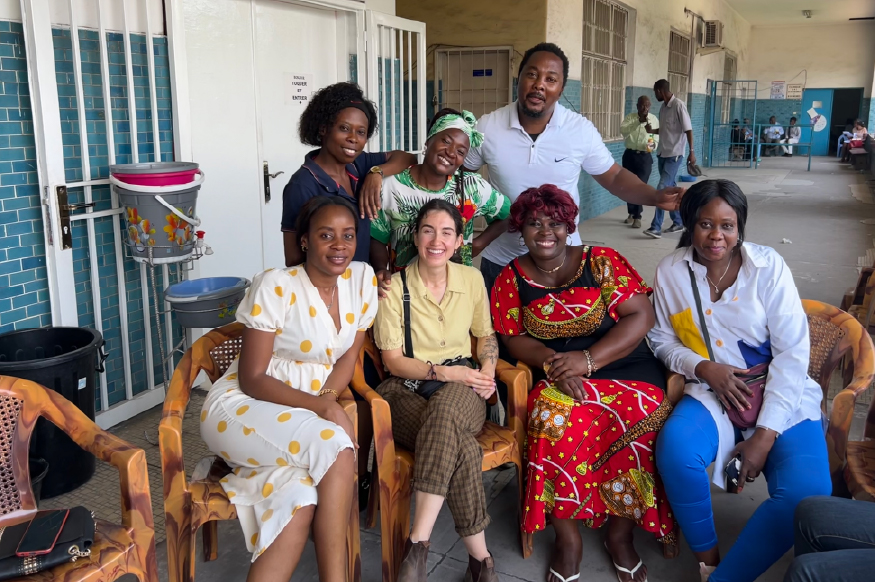
Photo credit: © Marthe Kalala / SCOSAF
Caption: A group of midwives from the SCOSAF theatre troupe and a CAM project officer sit in front of the Société Congolaise de la pratique Sage-Femme office in the Democratic Republic of the Congo
Expanding regional reach
A key element was giving midwives in remote communities more support.
During the project, 3 new regional SSNAMA chapters were created in South Sudan. Meanwhile, SCOSAF expanded regional advocacy in the DRC. These chapters extended the associations’ presence into areas where midwives often work in isolation, sometimes with very limited support or resources.
They became spaces for connection and collective action—linking frontline providers with local authorities and national discussions.
“Before, we didn’t have a voice outside of Juba,” said a chapter leader in Aweil East. “Now, with our chapters, we can organize and advocate for what our communities need, especially better conditions for midwives.”
Through these networks, midwives raise issues that directly affect care: access to supplies, safe working environments, and opportunities for training.
Inside the delivery room and beyond
At the same time, changes were taking place in health facilities.
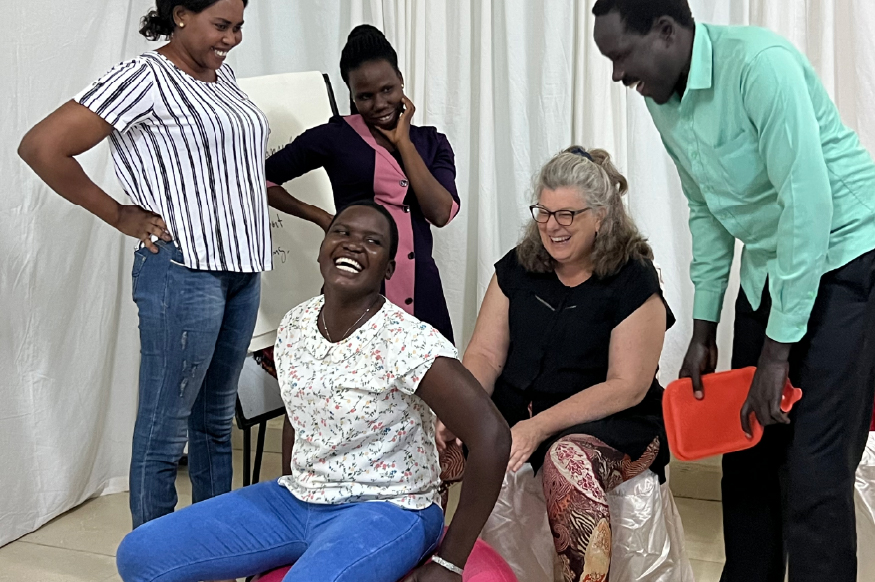
Photo credit: © Kariane St-Denis / CAM
Caption: SSNAMA midwife trainers participate in a hands-on training exercise on Respectful Maternity Care with a Canadian midwifery technical expert in Juba, South Sudan.
In South Sudan, 10 health facilities introduced quality improvement plans and strengthened respectful maternity care. In the DRC, 30 facilities implemented similar improvements. These included group education sessions, privacy-enhancing spaces, and access to essential equipment like blood pressure monitors. Midwives received ongoing training that combined clinical skills with a focus on rights. This included small but meaningful changes: explaining procedures, asking for consent, maintaining privacy, and ensuring women felt supported throughout labour. These changes became standard practice. By the end of the project:
- Positive experiences with midwife-led care increased significantly in the project’s targeted health facilities to 75.3% of women in South Sudan and 100% in the DRC. This was up from 55% and 8.7% respectively.
- More than 5,300 women in South Sudan and 15,824 in the DRC gave birth with a skilled attendant present in project-targeted health facilities.
- Over 53,000 antenatal and 15,000 postnatal visits were supported.
These numbers show more than just service delivery—they show trust.
Community engagement
SMART-RMC's work also extended beyond facility walls. Activities included midwife-led radio programs, mobile clinics, theatre performances, and community dialogues, including sessions with men and boys. These efforts helped families understand their rights and the importance of skilled care.
As awareness grew, so did confidence. Women sought care, and families supported them. Communities began to see midwives not just as birth attendants, but as leaders and educators.
Knowledge of respectful maternity care and sexual and reproductive health rights increased dramatically in both countries—reaching 86.7% in South Sudan and 85.7% in the DRC among women in project areas, with similar gains among community members.
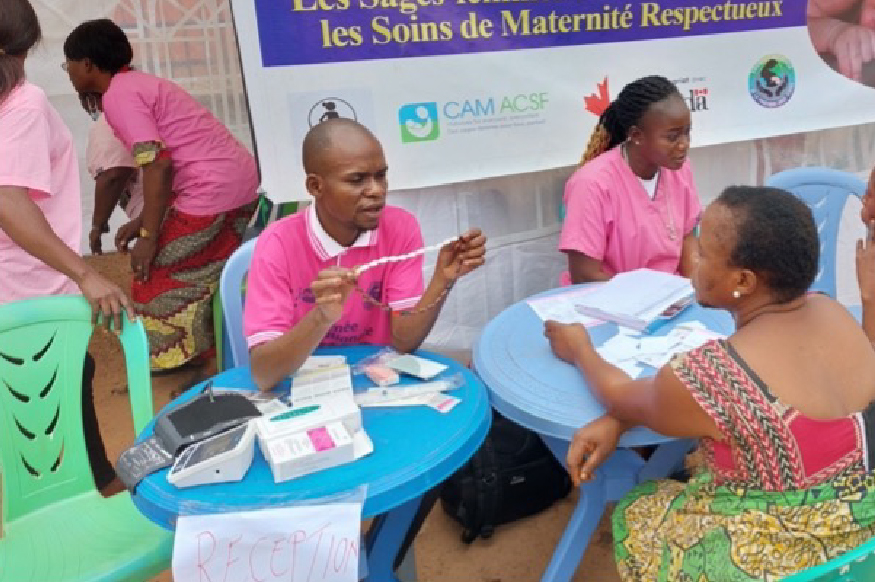
Photo credit: © Prisca Bankanza / SCOSAF
Caption: A group of midwives trained in Respectful Maternity Care offer reproductive health services at a mobile clinic in Mbanza-Ngungu health zone, Democratic Republic of the Congo.
Building systems that last
For the local associations, the impact goes beyond the life of the project.
SSNAMA now helps shape national health policies and is advising the government on a proposed nursing and midwifery regulation bill. It strengthened the way it works with its leaders and regional chapters across the country so that all voices can be heard.
“We now have improved collaboration between staff, board and field volunteers,” one SSNAMA staff member explained. “Regional consortium meetings gave us an opportunity to interact with stakeholders in the field… so that as an association we can lead change from within.”
The phrase “from within” captures the essence of the approach: locally led, professionally driven, and rooted in the communities it serves.
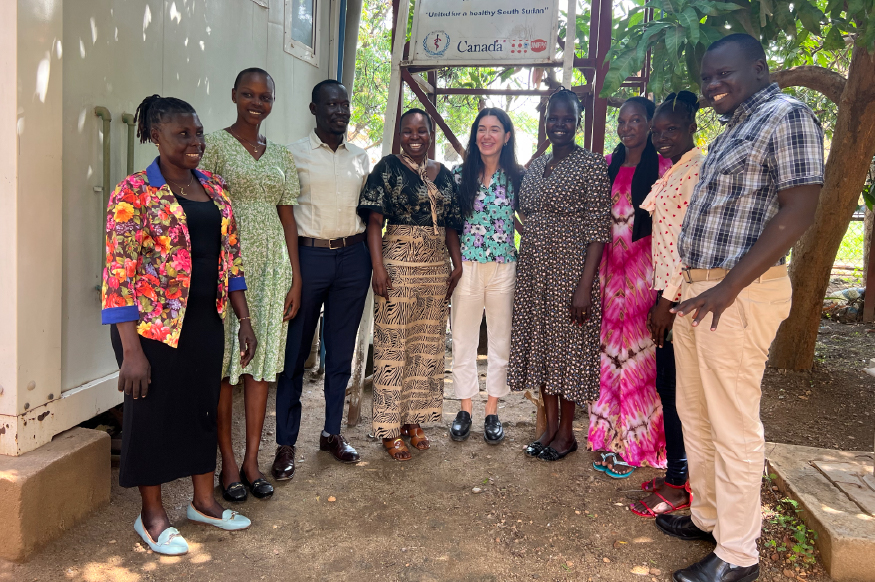
Photo credit: © Suzan Kaluma Juliuas / SSNAMA
Caption: SSNAMA and CAM staff gather outside the SSNAMA offices at Juba Teaching Hospital after an association strengthening activity.
A shift in how change happens
SMART-RMC shows what locally led change can look like in practice.
Rather than placing external actors at the centre, the project invested in professional associations to take charge. Midwives were not only service providers, but advocates, educators, and leaders in their communities.
With Canada’s support, this approach helped build systems that can continue to grow, adapt, and respond to local needs.
It also reinforced an important lesson: improving maternal health is not only about infrastructure or training. It requires trust, accountability, and care that recognizes women as rights-holders.
Returning to the Moment
Back in that healthcare facility, the woman in labour is still the focus. What surrounds her, however, is shifting.
A midwife explains what is happening. Consent is asked for. Questions are answered. Care is delivered not only with skill, but with respect.
These moments may seem small. But across facilities, communities, and systems, they add up to something bigger.
A shift in how care is understood.
And a recognition that respect is at the heart of it.
- Date modified:
