
Rewriting the rules: How servicewomen are driving structural change in Ukraine’s armed forces
Front lines to “picket lines”
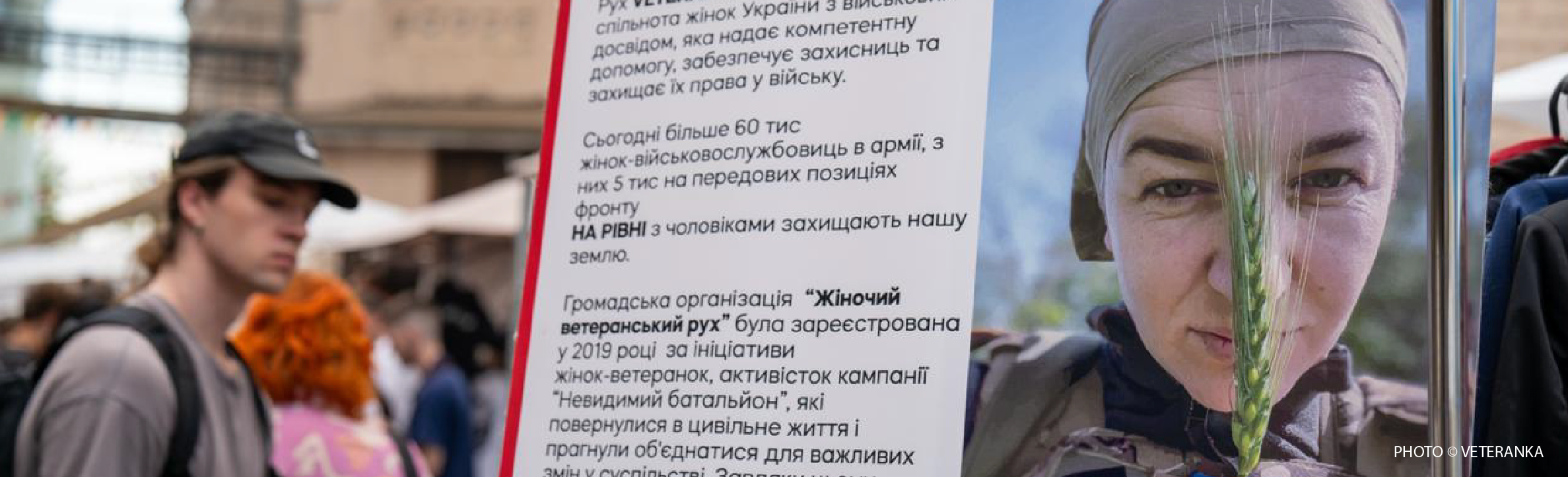
The Ukrainian Women Veterans Movement—known today as VETERANKA—didn’t start as an official organization. It was a circle of women who came together informally during the Revolution of Dignity. When Russia invaded Ukraine in 2014, these women traded their civilian lives for military uniforms.
After returning home, the women started a second mission. They saw that servicewomen lacked support and faced deep-seated bias. This was especially true when seeking justice for sexual abuse and harassment faced as servicewomen.
VETERANKA began defending servicewomen’s rights and raising public awareness. The group advocated for legislative change. VETERANKA called for institutional improvements to justice mechanisms within the military. It pushed for formal and transparent procedures. VETERANKA wanted every complaint of harassment and abuse to be safely reported, independently reviewed and fairly investigated.
VETERANKA’s early advocacy also assisted in the creation of 63 combat positions for women. This reform was significant because previous legislation had formally barred women from combat roles, forcing those already serving on the front lines to be officially classified in non-combat positions. By correcting this legal mismatch, the reform addressed institutional gender discrimination by aligning policy with the realities of women in the military.
Support at a critical time
In 2022, the full-scale invasion began.
The need for VETERANKA’s work grew overnight and was rapidly increasing. With support from the GAC funded project Support to Inclusive Governance in Ukraine, this network transformed into a formal non-governmental organization. It works to improve how the military treats servicewomen. VETERANKA has become a major civil society actor and leader in gender equality advocacy in Ukraine. It acts as a bridge between servicewomen and state institutions. This ensures that their voices inform policy discussions and governance reforms.
Even after facing a tragedy, VETERANKA stayed strong and marched forward. The organization’s founder, Andriana Susak-Arekhta suffered a lifechanging landmine injury. VETERANKA had to adapt and restructure under the new leadership of Kateryna Pryimak.
Rather than slowing the organization’s momentum, the transition underscored its collective strength: leadership rooted not just in 1 great member, but in a community of determined women. Together, they are working to improve access to justice for servicewomen.
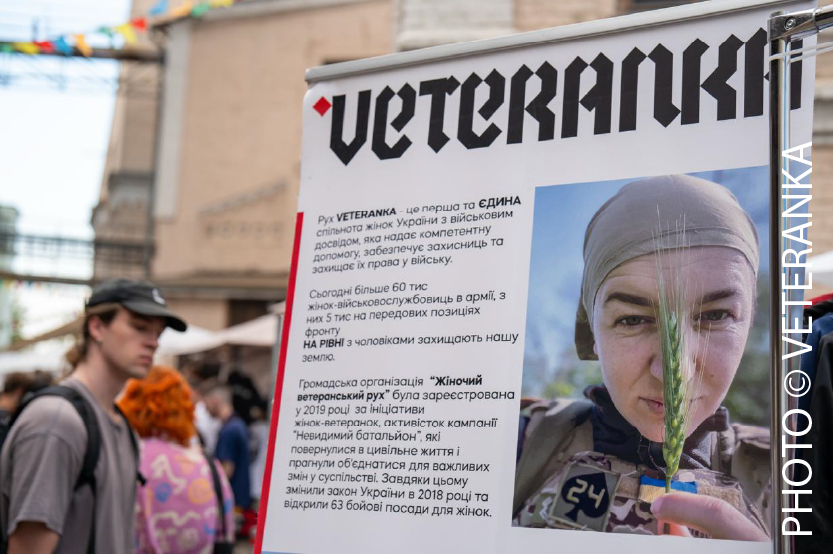
Photo credit: © Veteranka
A second fight
As more women joined Ukraine’s defence forces, VETERANKA’s role became even more essential. The rapid growth in women’s participation also revealed widening gaps in protection and accountability—gaps that could no longer be overlooked.
There is a widely known case from 2025 of a servicewoman publicly describing repeated sexual harassment and failed attempts to seek help. Instead of receiving help, she faced pressure and silence. This made clear what VETERANKA had been saying for years. The armed forces and its system of safeguarding rights after military service needed structural change.
Many complaints were often buried. Survivors risked facing retaliation. The military justice system lacked the mechanisms to respond. Servicewomen often could not access impartial complaint mechanisms. Most cases were handled within the same chain of command. There were no safe or independent reporting channels. This made the need to address discrimination and widespread sexual harassment impossible to ignore.
“Our goal is to make protection systematic—so rights do not depend on an NGO ‘calling someone,’ but on a fair procedure that works for everyone.” — VETERANKA representative (anonymized), Ukraine, 08.02.2026.
VETERANKA refused to let these stories fade without action.
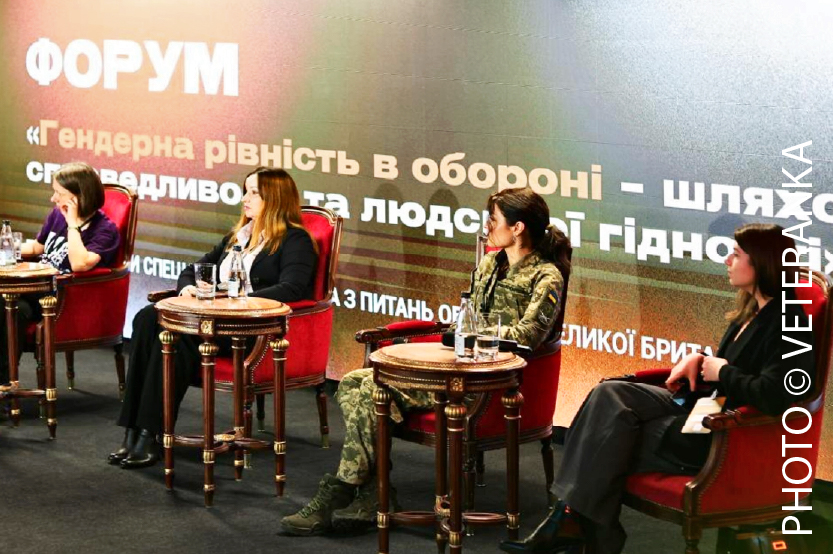
Photo credit: © Veteranka
Advocating up the chain
VETERANKA worked with survivors and began to communicate directly with policy-makers through consultations and working groups. One thing was very clear: they weren’t just advocating; they were helping to shape the law. While the immediate impact was on active service members, the reforms also strengthened the military justice system as a whole. VETERANKA’s efforts focused on transforming how the military handles complaints, making accountability and survivor protection an intrinsic part of the process. These new procedures now help to prevent harassment across the military.
VETERANKA spearheaded a national e-petition calling for a real system to address sexual harassment in the armed forces. The petition not only achieved the required public support but also prompted an official presidential response. This process shows how citizen-led advocacy can lead to formal government action and policy.
The group’s persistence paid off. On April 30, 2025, the Verkhovna Rada adopted draft law No. 13037 as a basis (first reading).
Parliament began working on changes to the Disciplinary Statute and the Internal Service Statute. This work aimed to strengthen military discipline and better prevent discrimination and sexual harassment. VETERANKA contributed to this process through constant advocacy and expert input. It took part in policy discussions, helping to ensure that reforms reflected the needs and rights of servicewomen.
On September 23, 2025 (and again on November 26, 2025), the parliamentary committee issued conclusions. It recommended adoption in the second reading.
Lasting change
While official final adoption is still pending, VETERANKA’s contributions will have a lasting impact. Its advocacy helped to establish clear, enforceable rules for reporting and addressing misconduct. This strengthens accountability within Ukraine’s military justice system. It helps service members subject to discrimination and harassment, and it improves the systems used to handle complaints.
For Ukraine’s servicewomen, VETERANKA represents a shift toward an improved military culture, one that listens, protects and ensures justice as a standard for all who serve. More broadly, this shift signals progress toward inclusive governance, where institutions are responsive to the rights and needs of all personnel.
- Date modified:
