
Sustainable Action Nigeria (SAN)
Canada recognizes that protecting biodiversity abroad and at home helps build strong, sustainable economies and creates healthier and more resilient societies. Canada’s 2023-2026 International Biodiversity Program helps developing countries to fulfill their commitments. The Kunming-Montreal Global Biodiversity Framework helps to restore, conserve and sustainably use biodiversity.
Canada helps turn waste into opportunity in Nigeria
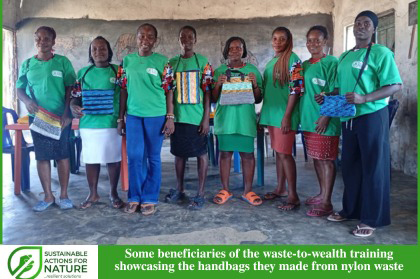
Photo credit: © Organization SAN
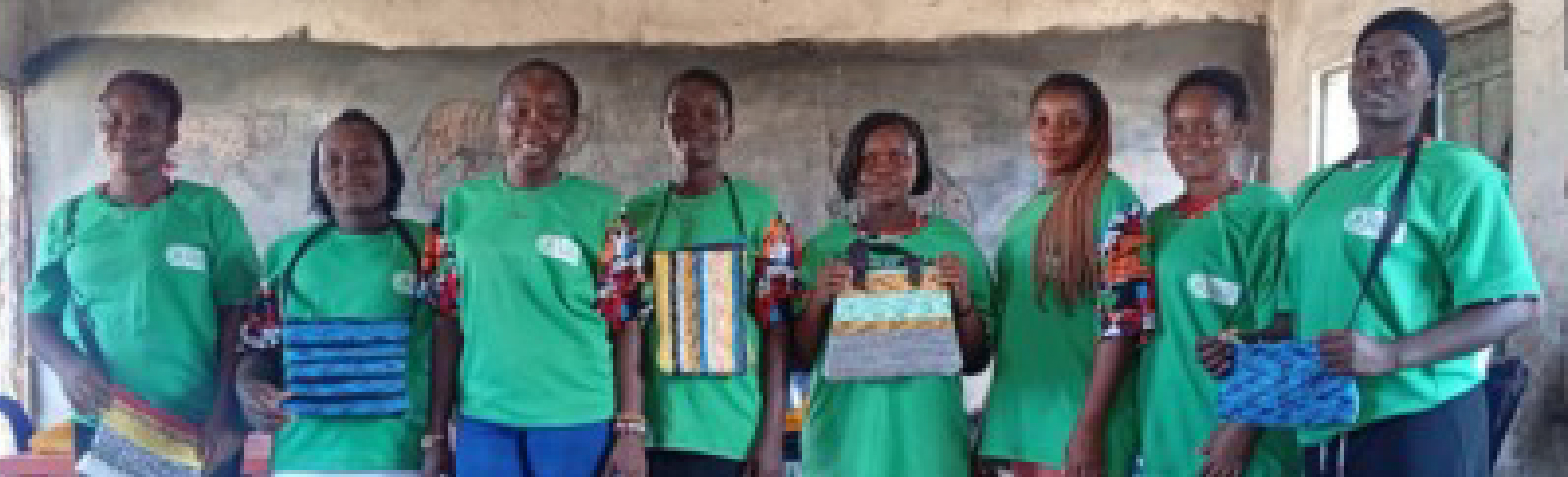
Some beneficiaries created handbags from recycled nylon waste during the Waste-to-Wealth training.
In Oyorokoto, a fishing community in Nigeria’s Niger Delta, plastic waste clogs waterways, damages mangroves, and threatens livelihoods. For Mrs. Ebinimi, a fisherwoman and mother, pollution has made sustaining her livelihood increasingly challenging.
Nigeria generates 4.7 million tonnes of plastic waste each year and 88% is mismanaged due to limited infrastructure and low recycling capacity. Less than 12% of plastics are recycled, and an estimated 200,000 tonnes leak into waterways annually, causing over CAD 10 billion in ecosystem damage.
The Niger Delta, home to Africa’s largest mangrove forest, is especially vulnerable. Mangroves serve as carbon sinks and fish nurseries. Plastic pollution degrades these ecosystems and threatens the livelihoods of nearly 90% of coastal households that depend on fishing. From small fishing villages, plastic waste flows into the ocean, scaling into a global crisis for marine biodiversity worldwide.
To address this crisis, Sustainable Action Nigeria (SAN) implemented the Community-Led Plastic Waste Reduction and Biodiversity Conservation in Andoni initiative through the Global Plastic Action Partnership (GPAP), funded by Canada’s International Biodiversity Program. Canada’s support enabled community clean-ups, up-cycling workshops, school outreach, and engagement in four remote coastal communities - turning awareness into action.
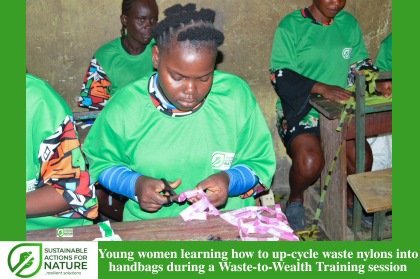
Photo credit: © Organization SAN
Young women learn how to upcycle waste into handbags during a Waste-to-Wealth training session.
The project delivered results that have an enduring impact on local communities:
- 500 kg of plastic removed from beaches and mangroves
- 104 women trained to up-cycle waste nylon into handbags, creating new income opportunities
- 500 students reached through bilingual “4Rs (reduce, reuse, recycle and recover)” environmental notebooks
- 300+ community members engaged, including women, youth, traditional leaders, and fishers
- Women earn up to $25 per week by upcycling discarded nylon waste into reusable products, creating income opportunities and improved waste management outcomes.
- Mangrove restoration efforts led to a 5% increase in periwinkles in the restored areas, providing an additional source of income and nutrition for local communities that depend on mangrove ecosystems for their livelihoods.
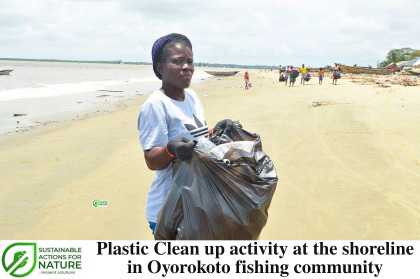
Photo credit: © Organization SAN
Shoreline clean-up activity in the Oyorokoto fishing community.
“I never believed we could earn an income from what we used to throw away,” Mrs. Ebinimi reflects.
“Now, by collecting and selling plastic waste for recycling, we can keep our waters clean and support our families.”
For Canada, this initiative shows that with the right support, community-led conservation can turn plastic waste into a pathway for sustainable local livelihoods and contribute to protecting global biodiversity.
- Date modified:
