
Pure Oceans
Canada recognizes that protecting biodiversity abroad and at home helps build strong, sustainable economies and creates healthier and more resilient societies. Canada’s 2023-2026 International Biodiversity Program helps developing countries to fulfill their commitments. The Kunming-Montreal Global Biodiversity Framework helps to restore, conserve and sustainably use biodiversity.
Canada joins Philippines’ frontline fight against plastic waste
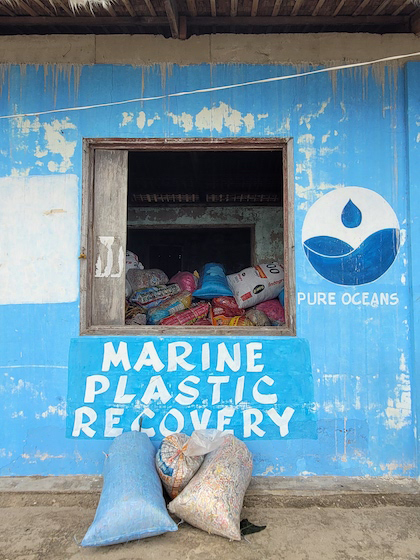
Photo credit: © Pia Ocampo | Pure Oceans
Sacks of hand-cut plastics wait to be stored at one of the Marine Plastic Recovery Facility in Brgy. Sto. Tomas, Tingloy, Batangas.
At dawn on a remote beach on Tingloy Island in the Philippines, Ed, Lai, and Tak gather plastic waste before the heat sets in. Local children join them, half playing, half helping, as plastic bottles and sachets are shaken free of sand and packed into sacks. For this island community, shoreline cleanups are essential to protecting the reefs that sustain their lives and livelihoods.
Tingloy lies within the Verde Island Passage, a 100-kilometre stretch widely recognized as the most biodiverse marine area in the Coral Triangle. The Passage hosts 60% of the world’s known shorefish species, along with extensive coral reefs, mangroves, seagrasses, and endangered species such as the hawksbill turtle. This extraordinary ecosystem faces serious threat from plastic pollution: research shows corals in contact with plastic are 20 times more likely to develop disease.
With no functioning solid waste management system, Tingloy receives an average of 6 kilograms of plastic waste per 50 metres of shoreline every day. Across the Philippines, 35–75% of plastic waste leaks into the environment, and in isolated island communities like Tingloy, leakage is nearly 100%.
Pure Oceans, a community-based marine conservation initiative, works in Tingloy to address plastic pollution at its source. Through community training, shoreline cleanups, incentive-based recovery programs, and local capacity building, Pure Oceans supports islanders in keeping plastic away from reefs.
This work is enabled through the Global Plastic Action Partnership (GPAP) plastics and biodiversity small grant initiative, funded by Canada’s International Biodiversity Program. This initiative supports the operation of two plastic recovery hubs linking Tingloy to responsible recycling and upcycling partners on the mainland.
In just four months, Pure Oceans:
- Recovered 3.6 tonnes of plastic waste
- Engaged 300+ community members, including women, youth, and men
- Sustained recovery programs for sachets and for cloth diapers kits in exchange for disposable diapers
- Supported regular shoreline cleanups
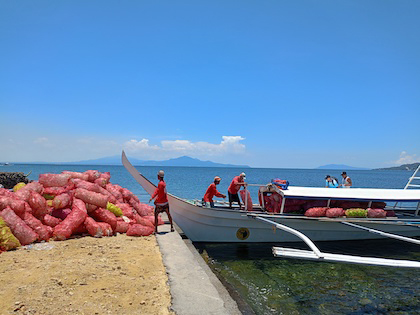
Photo credit: © Pure Oceans
Cleaned and segregated plastics get to the mainland in reused onion sacks. The plastic will be loaded onto trucks and travel 100+ kilometers to the partner upcycler.
“Young people have a role to play,” says Jommel Manalo, youth council chair. “When waste is recovered properly, it protects our reefs and supports our community.”
Through youth-led clean-ups, waste recovery initiatives, and peer-to-peer education, young people are helping change how plastic is viewed from something to discard to something to manage responsibly. This growing involvement is fostering a renewed sense of ownership and pride, as communities begin to see cleaner shores and healthier reefs, and new opportunities emerge around recycling and environmental stewardship.
- Date modified:
