
Canada helps protect nature and livelihoods in the Amazon
Canada recognizes that protecting biodiversity abroad and at home contributes to building strong, sustainable economies and creating healthier and more resilient societies. Canada’s 2023-2026 International Biodiversity Program helps developing countries to fulfill their commitments under the Kunming-Montreal Global Biodiversity Framework to restore, conserve and sustainably use biodiversity.
São Luís, Maranhão, Brazil
The village of Rosário sits across the Baía de São José. It’s about an hour’s drive from the state capital, gives a view of the Atlantic coast covered with large mangrove forests. This is one of the biggest mangrove areas in Brazil. Rivers like the Itapecuru and Munim feed these forests.
As you travel inland, the sounds of daily life blend mixed with nature. This shows how closely people’s lives are connected to the Amazon and its rich plant and animal life.
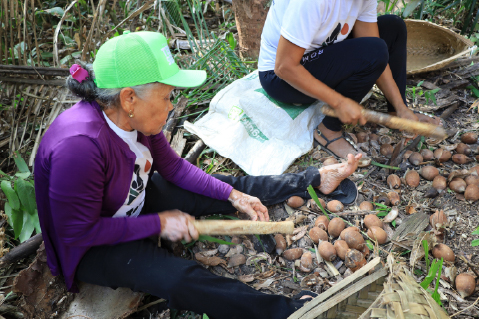
Photo credit: © FAO, Donna Durruza
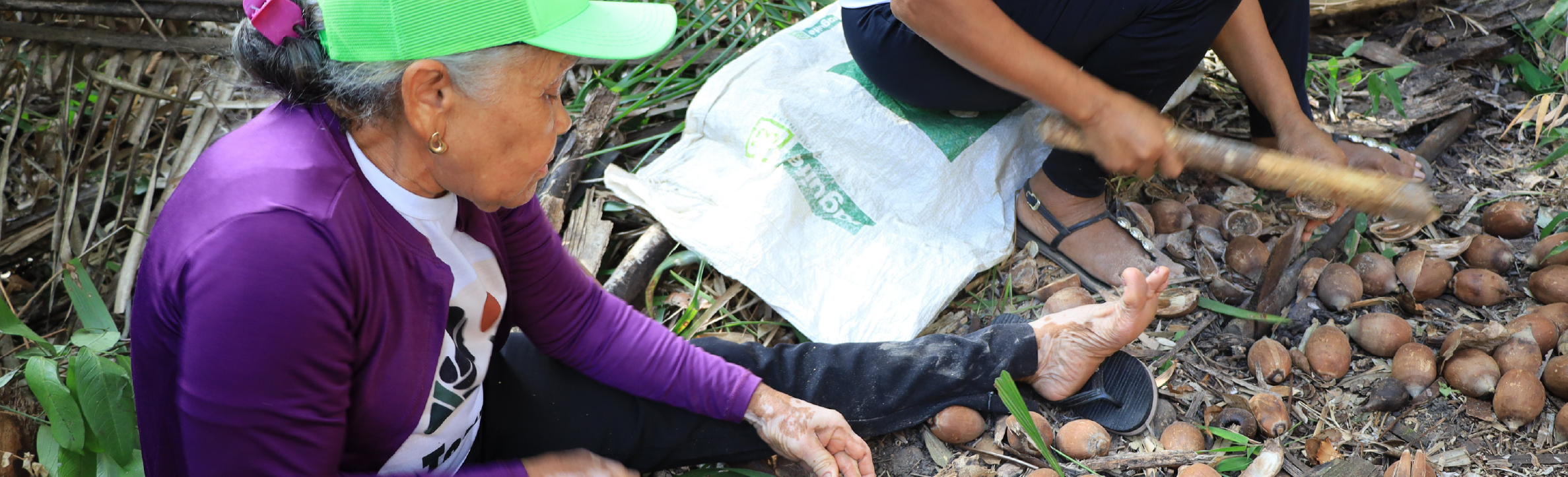
Harvesting babaçu palm fruit
The Brazilian Legal Amazon covers about 5 million square kilometres. More than 29 million people live there. It is a region full of culture and natural beauty. But it also faces many challenges. These include land ownership issues, gender inequality, the struggle for Indigenous Peoples rights, deforestation, and climate change.
Canada is helping support solutions to these problems. With funding from Canada’s International Biodiversity Program, the UN Multi-Partner Trust Fund for the Sustainable Development of the Brazilian Legal Amazon, is supporting locally led solutions to protect nature and livelihoods. As of November 2025, Canada has committed $17.3 million to this initiative—an initial $13 million announced during the G20 Leaders’ Summit in 2024 plus $4.3 million announced at the climate COP30 in November 2025.
During COP30, Marcello Brito from the Interstate Consortium for the Legal Amazon, stated, “The Fund symbolizes a new way of doing cooperation in the Amazon: one that starts from the territories themselves, with the states as protagonists, and with the support of the United Nations, the federal government, and international partners and donors.”
One project is called Terras para Elas (Land for Women). It was implemented by the Food and Agriculture Organization (FAO) with a land agency called Instituto de Terras e Colonização do Maranhão (ITERMA). The project helps women in rural and traditional communities. This includes Quilombolas (Afro-Brazilian descendant communities), Indigenous Peoples, riverside dwellers, babaçu nut breakers, trans women, and LGBTQIAPN+ groups.
The project helps women gain legal rights to land. It plans to secure 2,500 land titles in women’s names. It will also train 5,000 women in sustainable farming and small business skills. In addition, 1,250 people will get better access to credit.
The project also supports entire communities. For example, the Boa Vista association received shared land rights. This benefits 224 families across 1,847.7 hectares. For many, this is the result of decades of effort to claim their ancestral lands.
Protecting the environment is another key goal. The project aims to monitor 100,000 hectares of land. It also plans to reduce deforestation by 20% and prevent 50,000 tonnes of carbon emissions. These actions keep forests healthy and support long-term stability for communities. During COP30, the State Government of Maranhão announced an additional $5.5 million Canadian dollars towards the project for further land regularization. This demonstrates how Canadian investments can be leveraged to achieve sustainable use of biodiversity.
Overall, this work helps build a stronger and more inclusive Amazon. It shows how Canada and its partners can work together to protect nature and support the people who depend on it. These actions also help create a more stable environment and economy, which ultimately benefits people in Canada as well.
- Date modified:
