
Canada helps local women protect the heart of the Coral Triangle
Canada recognizes that protecting biodiversity abroad and at home contributes to building strong, sustainable economies and creating healthier and more resilient societies. Canada’s 2023-2026 International Biodiversity Program helps developing countries to fulfill their commitments under the Kunming-Montreal Global Biodiversity Framework to restore, conserve and sustainably use biodiversity.
Sasi is a traditional system used by Indigenous communities in the Maluku and Papua regions of Indonesia. It helps people use natural resources in a sustainable way. Sasi traditions guide when and how people can harvest marine life, such as fish, sea cucumbers, and lobsters. These customary practices give species time to grow and recover, so there will be enough in the future. By controlling access to resources, sasi protects the environment and supports the well-being of local communities.
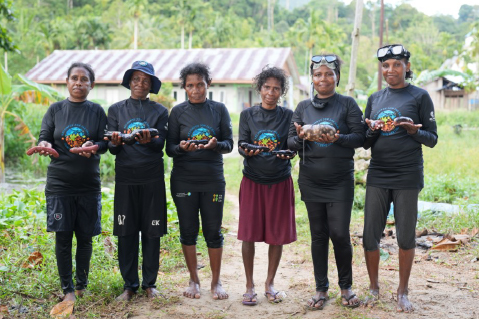
Photo credit: © @Awaludinnoer
The Joom Jak Women proudly showing part of the harvest of their free-dive
For many generations, men have mostly led sasi. This reflects broader traditions where men hold most leadership roles. However, this is starting to change in some places.
In Aduwei Village, women are taking on new leadership roles is sasi. The Joom Jak Sasi Group, a women‑led organization, is transforming how sasi is practiced. The group was founded by Mama Ribka Botot. It focuses on protecting sea cucumbers and lobsters in a coastal area that was once overfished.
Through Global Affairs Canada’s International Biodiversity Program’s Empowering Stewardship in the Coral Triangle project, the group is working to protect marine life and manage harvesting. The project is implemented by The Nature Conservancy and YKAN. It supports not only the Aduwei Village, but also two other women-led sasi groups in Kapatcol and Salafen in Misool.
Women in the Joom Jak Sasi Group now play a key role in regulating and enforcing sasi harvesting practices. They regularly monitor the protected area to ensure no one infringes on the sasi territory. Group members have learned how to free dive so they can check how marine species are growing and observe the health of the ocean. The group includes approximately 60 women and girls. It offers opportunities for mentorship, leadership development, and hands-on learning about marine conservation.
This change has not been easy. In many Papuan communities, women have limited roles in decision-making about natural resources. But Mama Ribka and her supporters engaged in many discussions with local leaders, church members, and village authorities to demonstrate the value of women’s involvement. Over time, this collaborative approach earned the women’s group the official right to manage a 265-hectare marine area.
This shift in governance has brought meaningful change to community life. Historically, women were only involved after harvesting. Now, they play a central role in deciding when harvesting can begin and end. They also help set rules, manage profits, and decide who can harvest in the area. As fish stocks recover and the environment improves, more people in the community are recognizing the value of women’s leadership.
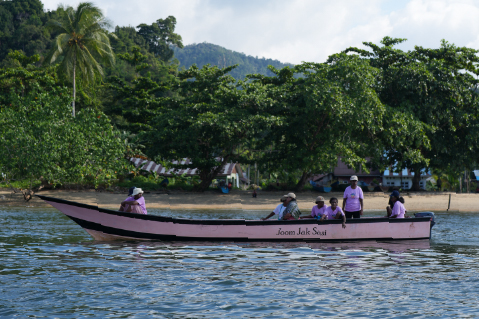
Photo credit: © @Awaludinnoer
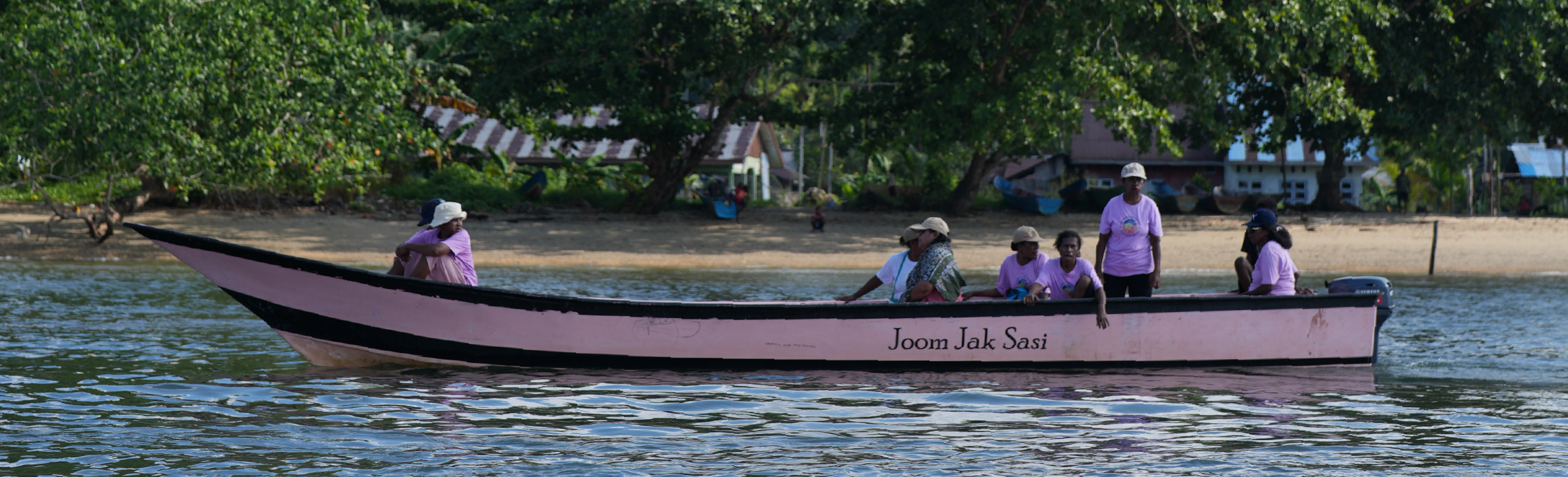
Joom Jak women driving to the sasi opening in their pink boat.
The benefits of sasi are shared across the community. Money earned from harvesting is used to support education, health services, and small local businesses. This shows how traditional practices can be adapted to meet modern needs while still respecting cultural values.
The three women-led groups are exploring the potential of having sasi-based ecotourism. Visitors may have the chance to take part in harvesting activities or help monitor marine life and ocean health.
The story of Aduwei Village shows how empowering women can strengthen both communities and the environment. It also shows that tradition and innovation can work together to create a more inclusive and sustainable future.
- Date modified:
