
Canada drives nature-based solutions in Colombia’s Pacific Coast
Canada recognizes that protecting biodiversity abroad and at home contributes to building strong, sustainable economies and creating healthier and more resilient societies. Canada’s 2023-2026 International Biodiversity Program helps developing countries to fulfill their commitments under the Kunming-Montreal Global Biodiversity Framework to restore, conserve and sustainably use biodiversity.
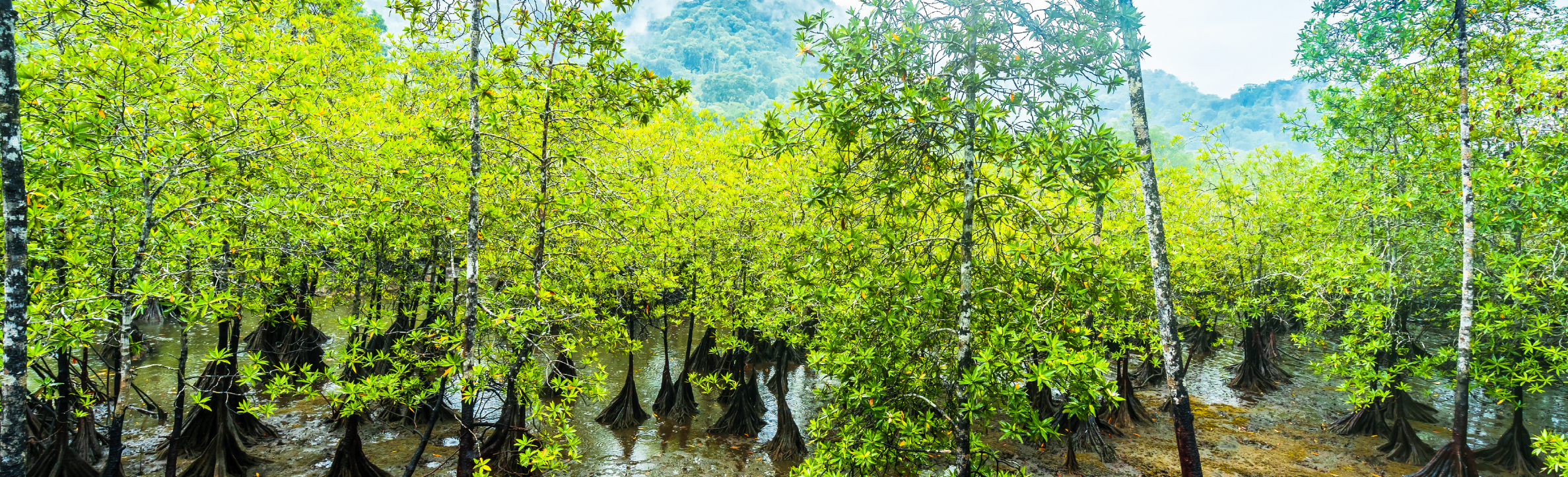
Along Colombia’s Pacific coast, large mangrove forests are home to many kinds of plants and animals. These forests help protect the shoreline from storms. They also support fishing, store carbon and preserve the culture of Afro-Colombian communities who have cared for them for generations.
But these mangroves are under threat. Problems like deforestation, pollution, weak governance, and socio-economic pressures are putting them at risk.
Credit: Adobe Stock Photo
Mangrove forests on Colombia’s Pacific coast protect biodiversity, store blue carbon, and sustain local communities.
These challenges are strongest in Chocó, Valle del Cauca, Cauca, and Nariño. These regions are rich in biodiversity but are shaped by historic inequalities. The health of the mangroves is directly linked to the resilience and well-being of local communities.
Through investments from Global Affairs Canada’s International Biodiversity Program, the Global Environment Facility’s (GEF) Global Biodiversity Framework Fund (GBFF) supports a project led by the Development Bank of Latin America and the Caribbean (CAF) in partnership with Colombia’s Ministry of Environment and Sustainable Development and the Fondo para la Vida y la Biodiversidad. The Biomanglar project is helping protect and restore mangroves while supporting Afro-Colombian communities whose lives and cultures depend on them.
Challenges in the region
Mangroves along Colombia’s Pacific coast have been under pressure for many years. From 1986 to 2022, many mangrove areas were lost because of overuse, economic growth and climate change. Many communities also lack sustainable economic opportunities, and local governance structures remain under-resourced.
Women play an important role in these communities. Many harvest piangua, a type of shellfish that lives in mangrove roots. It is an important source of nutrients, income and part of the local culture. However, women often face barriers. These include economic constraints, fewer chances to take part in decisions and risks of gender-based violence.
Young people also face challenges. Many have limited access to education, employment, and leadership opportunities.
A community-centered solution
The Biomanglar project focuses on helping Afro-Colombian communities lead conservation efforts. It recognizes that protecting nature is closely linked to protecting people’s rights, cultures and knowledge. By aligning conservation efforts with local traditions and priorities, the project aims to deliver inclusive outcomes that strengthen environmental and social resilience.
The project works in several ways:
- It protects and restores mangrove forests
- It improves how these areas are managed
- It supports sustainable jobs like shellfish harvesting, fishing and nature-based tourism
- It promotes gender equality and supports women leaders
- It uses traditional knowledge along with modern science
Biomanglar also uses mechanisms aligned with global biodiversity goals to support conservation, such as payments for ecosystem services, and programs that measure carbon stored in mangroves.
The project aims to create real benefits for both people and nature. It plans to:
- improve management of over 71,000 hectares of mangroves
- strengthen governance across nearly 490, 000 hectares of Afro-Colombian territories
- restore 500 hectares of damaged mangrove forest
- help nearly 3,000 people, especially women and youth
By restoring nature and empowering communities, the project seeks to enhance livelihoods, promote gender equity, and help communities adapt to climate change.
A pathway for protecting biodiversity around the world
Biomanglar reflects the mission of the GEF GBFF: empowering communities, advancing gender equality, strengthening governance, and supporting nature-positive economies. It serves as a model for protecting biodiversity in ways that are rooted in cultural heritage, community leadership, and long-term resilience.
- Date modified:
