
Canada enables eco-tourism growth in Phalaubeni
Canada recognizes that protecting biodiversity abroad and at home contributes to building strong, sustainable economies and creating healthier and more resilient societies. Canada’s 2023-2026 International Biodiversity Program helps developing countries to fulfill their commitments under the Kunming-Montreal Global Biodiversity Framework to restore, conserve and sustainably use biodiversity.
For many years, Phalaubeni village, a South African rural community located between Kruger National Park, Letaba Ranch, and Mthimkhulu Game Reserve, faced serious challenges. High unemployment and limited job opportunities made it difficult for families to earn a stable income. At the same time, the community dealt with frequent human-wildlife conflict. Broken perimeter fences allowed elephants and other wild animals to move freely into the village, damaging crops and property.
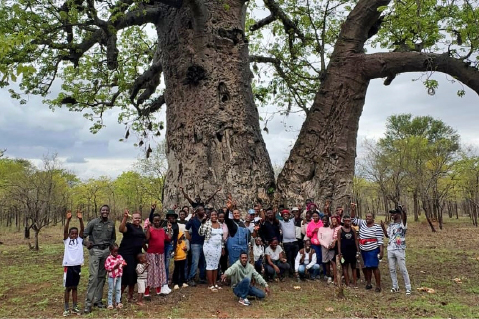
Photo Credit: Kruger to Canyons (K2C) Biosphere
One of the five community groups who were guided by the newly appointed and trained site guides stopped along the hike to appreciate the huge baobab tree along the route
As economic pressures grew, so did the strain on natural resources. Some people turned to activities like fence theft, illegal grazing, and selling game meat. For many households, these actions were a way to survive in difficult conditions. Over time, wildlife, including elephants entering the village through broken fences, came to be seen as a danger rather than a benefit. Despite these challenges, the community wanted to find a better way forward. They began exploring how to reduce conflict while creating new sources of income. The community had a powerful insight: the landscape they depended on could also generate income if protected and used sustainably.
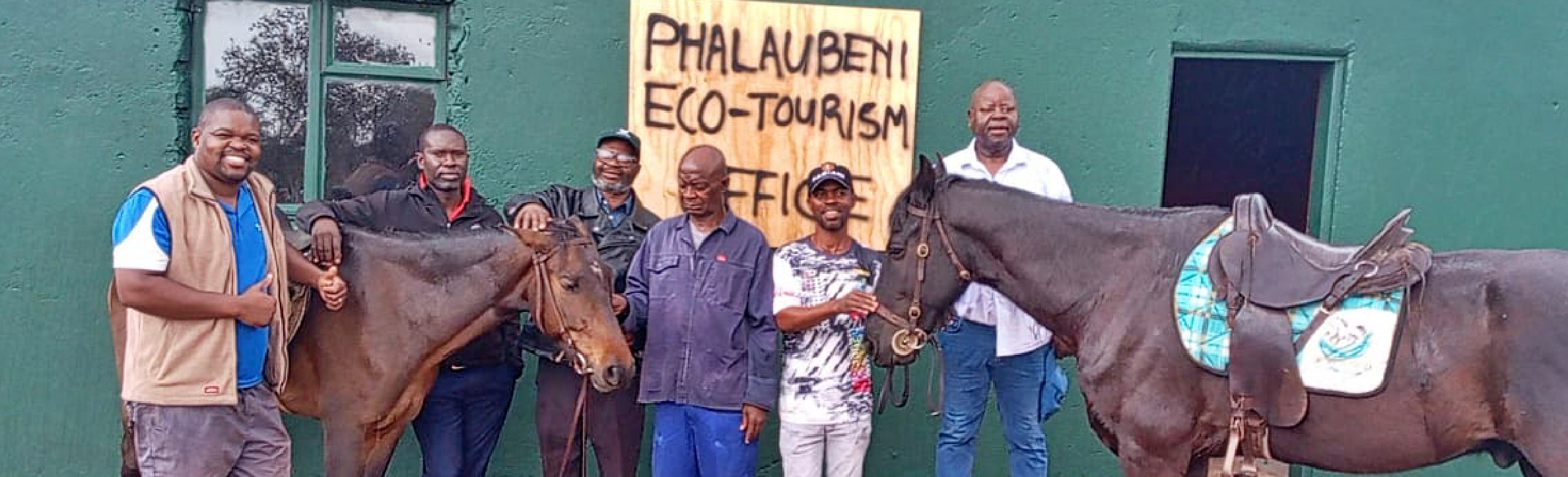
With support from the Restoring African Rangelands Project, funded by Canada’s International Biodiversity Program and implemented by the CGIAR Science Program on Multifunctional Landscapes, the community transformed an unused building into the Phalaubeni EcoTourism Office. The office promotes sustainable tourism, generates local income, and protects the environment while sharing the community’s knowledge, culture, and natural heritage with visitors.
The opening of the EcoTourism Office was a meaningful event. Community Development Forum leaders opened the gate, and the Headman and committee representatives cut the ribbon together. This moment reflected strong leadership and a shared commitment to change. As part of the initiative, five community members were trained as nature guides. They now lead visitors on a five-kilometre trail through the landscape starting at Phalaubeni Dam. Along the route, they highlight termite mounds, ecological processes, land history and a historic baobab tree. At the Macilori Koppie viewpoint, elders share traditional stories that had not been told in decades.
For many community members, this has been a powerful moment of rediscovery. Access to the landscape had been limited or avoided because of fear, human-wildlife conflict, and safety concerns. What had once been viewed primarily as a source of risk was revealed to be something beautiful—something worth showcasing and protecting. Now, the EcoTourism Office aims to market the trails to regional networks.

Photo credit: Kruger to Canyons (K2C) Biosphere
The Phalaubeni Ecotourism Office was officially opened by local leadership and representatives of K2C in a ribbon cutting ceremony.
The establishment of the EcoTourism Office marked more than the launch of a local community non-profit enterprise. It has encouraged a shift in behaviour, mindsets, and day-to-day decisions. Fences were repaired and are better maintained to support tourism. Protecting habitats has become a priority because healthy ecosystems attract visitors and create income. The guides also help monitor ecosystem health, strengthening local conservation knowledge. Most importantly, conservation became local, practical, and community driven—not something imposed from external actors, but shaped and led by the community itself.
Phalaubeni’s story shows that human–wildlife coexistence is possible. It also demonstrates that conservation and economic development can work together. With strong community leadership and inclusive participation, eco-tourism can provide both environmental and financial benefits.
Through eco-tourism, livelihoods and conservation are now meaningfully connected. The community is moving forward with confidence. Phalaubeni is building a more sustainable future – one where both people and wildlife can thrive.
- Date modified:
