
Canada supports Indigenous women securing land rights
Canada recognizes that protecting biodiversity abroad and at home contributes to building strong, sustainable economies. It also creates healthier and more resilient societies. Canada’s 2023-2026 International Biodiversity Program helps developing countries to fulfill their commitments. The Kunming-Montreal Global Biodiversity Framework supports the restoration, conservation, and sustainable use of biodiversity.
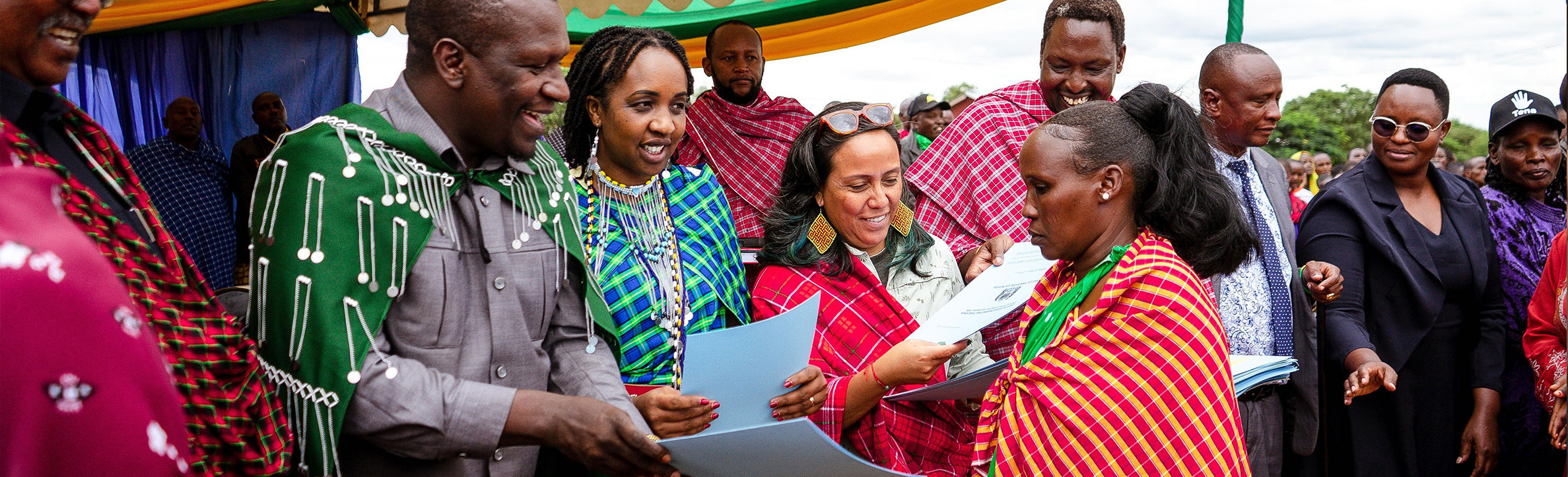
Ana, an Akie villager in traditional Maasai clothing, stands in line under the sun in Simanjiro, Tanzania. She waits with other women for a Certificate of Customary Rights of Occupancy (CCRO) to protect their land.
Partners from the Podong Indigenous Peoples initiative stand nearby. Canada’s International Biodiversity Program funded the project with $7 million for work in Guatemala, Panama, Nepal, and Tanzania. It is co-led by the International Indigenous Forum on Biodiversity, International Union for the Conservation of Nature’s (IUCN) Indigenous Peoples’ Organization Members and IUCN’s Indigenous Peoples Programme.
“Podong” means “basket” in the Indigenous Marma language of Bangladesh, symbolizing abundance and Indigenous women as guardians of life.
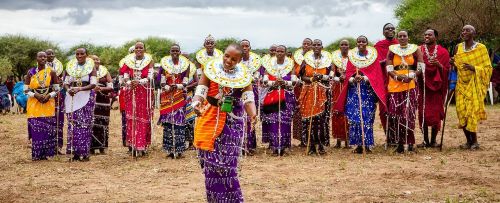
Photo credit: © Hope Kiwelu / UCRT
Launch of Podong Indigenous Peoples initiative in Simanjaro, Tanzania.
When her turn comes, Ana steps forward and receives her certificate. She studies the paper - it secures land rights for pastoralist and hunter-gatherer communities like hers.
“For our community, the land is our life. It is where we hunt, gather food, and pass our traditions to our children. Through the CCRO process, we have strengthened relationships with neighbouring villages and agree on how to use our shared lands. Knowing that this land is recognized and protected gives me hope that our way of life will continue for my son’s generation,” she said.
Ana is one of the 1,186 women in Tanzania engaged in land governance through CCROs or Certificates of Village Land and Land Use Planning. Her community is among 13 managing nearly 150,000 hectares of land with secure rights.
Secure land rights have helped nearly 9,500 people and resolved 13 community boundary conflicts. With fewer conflicts and more control, Maasai communities can manage natural resources according to their customs while protecting biodiversity for future generations.
The local partner, Ujamaa Community Resource Team, uses CCROs to secure land and habitat across northern Tanzania. This has helped maintain landscape connectivity, keeping land intact for multiple use grazing and hunter gathering. Connected communal lands keep ecosystems open, allowing mobility and co-existence of people, livestock and wildlife.
Indigenous Peoples lead Podong. In fact, 85% of the project’s funding goes directly to Indigenous communities.
Podong shows that when Indigenous Peoples lead, real change can happen, rooted in traditional knowledge and community values.
“Podong is more than just a project—it is a movement rooted in the wisdom of our Elders and the strength of our communities. It honours Indigenous Peoples contributions to biodiversity conservation and climate action, grounded in traditional knowledge systems that have safeguarded the Earth for generations,” said Anita Tzec, Maya Yucatec leader and IUCN’s Senior Program Manager on Indigenous Peoples and Conservation.
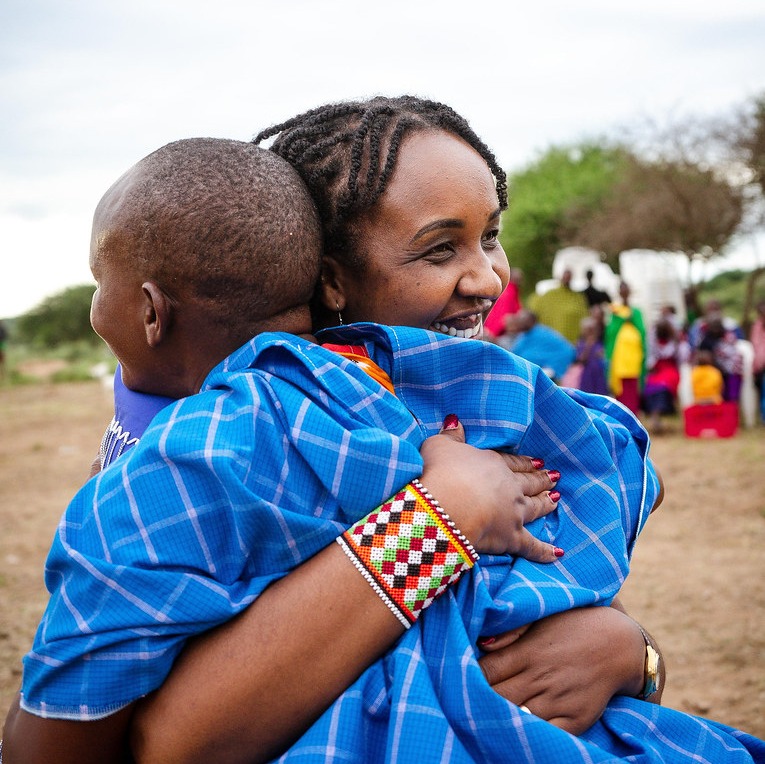
Photo credit: © Hope Kiwelu / UCRT
Paine Eulalia Mako, Executive Director of Ujamaa Community Resource Team (UCRT) hugs local Maasai woman.
Since it began, Podong has supported Indigenous-led conservation work in Tanzania, Nepal, Guatemala, and Panama. It has also strengthened Indigenous leadership, particularly among women.
“Women recieve different trainings on leadership and economic empowerment, which allows them to be more involved in decision-making on land and natural resource management,”said Paine Mako, Executive Director, Ujamaa Community Resource Team.
Podong also brings Indigenous leaders to global policy spaces. In particular, the Convention on Biological Diversity and the United Nations Framework Convention on Climate Change. They influence decisions affecting their territories and share knowledge in these spaces. They contribute to the implementation of the Kunming-Montreal Global Biodiversity Framework, the Paris Agreement, and the IUCN Global Indigenous Agenda. In this way, Indigenous Peoples demonstrate they are rightsholders, decision-makers and equal partners.
- Date modified:
